
Portal:Peninsula: Difference between revisions
No edit summary |
Richer timeline: events from Salinas, Santa Elena, La Libertad and Ancón pages, plus the WWII US base at Salinas |
||
| Line 230: | Line 230: | ||
<!-- ═══ HISTORY ═══ --> | <!-- ═══ HISTORY ═══ --> | ||
<div class="ewp-kicker"><translate>8,000 years in | <div class="ewp-kicker"><translate>8,000 years in 90 seconds</translate></div> | ||
<div class="ewp-h2"><translate>A short history of a very old place</translate></div> | <div class="ewp-h2"><translate>A short history of a very old place</translate></div> | ||
<div class="ewp-lead"><translate>From some of the first settlers in the Americas to an American wartime air base — scroll through it all.</translate></div> | |||
<div class="ewp-tl"> | <div class="ewp-tl"> | ||
<div class="i"><div class="y"><translate>8000–4600 BC</translate></div><translate>The [[Las Vegas culture]] — some of the first settled people in Ecuador — live here. Their cemetery at Sumpa holds the [[Amantes de Sumpa]].</translate></div> | <div class="i"><div class="y"><translate>8000–4600 BC</translate></div><translate>The [[Las Vegas culture]] — some of the first settled people in Ecuador — live here. Their cemetery at Sumpa holds the [[Amantes de Sumpa]].</translate></div> | ||
<div class="i"><div class="y"><translate>From 3500 BC</translate></div><translate>Valdivia, Machalilla and Chorrera cultures follow. The sacred Spondylus shell is traded far into the Andes — and gives the [[Portal:Ruta del Spondylus|Ruta del Spondylus]] its name.</translate></div> | <div class="i"><div class="y"><translate>From 3500 BC</translate></div><translate>Valdivia, Machalilla and Chorrera cultures follow. The sacred Spondylus shell is traded far into the Andes — and gives the [[Portal:Ruta del Spondylus|Ruta del Spondylus]] its name.</translate></div> | ||
<div class="i"><div class="y">1911</div><translate>Ecuador's first oil well is drilled at [[Ancón]]. | <div class="i"><div class="y"><translate>1527–1531</translate></div><translate>Pizarro's ships reach this coast; by tradition he came ashore at La Caleta in 1531. Colonial life turns on salt, fishing and farming. [[Mirador de La Caleta|See La Caleta →]]</translate></div> | ||
<div class="i"><div class="y">1937</div><translate>[[Salinas]] becomes a canton on 22 December.</translate></div> | <div class="i"><div class="y"><translate>1824 · 1839</translate></div><translate>Gran Colombia creates the canton of "Punta de Santa Elena"; in 1839 [[Santa Elena (City)|Santa Elena]] becomes a canton of Guayas.</translate></div> | ||
<div class="i"><div class="y">1993</div><translate>[[La Libertad]] becomes a canton (law published 14 April).</translate></div> | <div class="i"><div class="y"><translate>1858</translate></div><translate>The geographer Manuel Villavicencio records tar and asphalt seeps on the peninsula — the first scientific record of petroleum in Ecuador.</translate></div> | ||
<div class="i"><div class="y">2007</div><translate>Santa Elena Province is created on 7 November, separating from Guayas.</translate></div> | <div class="i"><div class="y"><translate>1896</translate></div><translate>After a three-year drought, President Eloy Alfaro exempts the canton from taxes.</translate></div> | ||
<div class="i"><div class="y"><translate>1911</translate></div><translate>Ecuador's first oil well, Ancón 1, is drilled at [[Ancón]].</translate></div> | |||
<div class="i"><div class="y"><translate>1918</translate></div><translate>Santa Elena's council renames the hamlet of La Agujereada: it becomes Recinto [[La Libertad]].</translate></div> | |||
<div class="i"><div class="y"><translate>1919–1929</translate></div><translate>Anglo Ecuadorian Oilfields builds its company camp at Ancón, bringing workers from Britain and the Caribbean, and opens the La Libertad refinery in 1929. [[Oil Industry on the Peninsula|The oil story →]]</translate></div> | |||
<div class="i"><div class="y"><translate>1936</translate></div><translate>The railway from Guayaquil reaches Salinas — and the fishing village starts becoming a beach resort.</translate></div> | |||
<div class="i"><div class="y"><translate>1937</translate></div><translate>[[Salinas]] becomes a canton on 22 December.</translate></div> | |||
<div class="i" style="background:#fff4e8;border:1px solid #ffd0bd;border-radius:12px;padding:10px 14px;margin-left:-6px;"><div class="y"><translate>1942–1946 · World War II</translate></div><translate>After Pearl Harbor, Ecuador lets the United States build an air and seaplane base at Salinas — known as Base Gama — to guard the Pacific approach to the Panama Canal, alongside a second base on the Galápagos. American fighter planes fly from the new runway, and families living in the cove are moved to Santa Rosa. The Americans leave in early 1946 and hand everything to Ecuador's armed forces. [[Aeropuerto General Ulpiano Páez|What became of the airfield →]]</translate></div> | |||
<div class="i"><div class="y"><translate>1946–1962</translate></div><translate>The old base runway serves international flights, including Panagra, until Guayaquil's airport takes over.</translate></div> | |||
<div class="i"><div class="y"><translate>1976</translate></div><translate>The oil fields of the peninsula are nationalised.</translate></div> | |||
<div class="i"><div class="y"><translate>1977</translate></div><translate>Archaeologist Karen Stothert begins excavating Sumpa, putting the Las Vegas culture on the scientific map.</translate></div> | |||
<div class="i"><div class="y"><translate>1993</translate></div><translate>[[La Libertad]] becomes a canton (law published 14 April).</translate></div> | |||
<div class="i"><div class="y"><translate>2007</translate></div><translate>Santa Elena Province is created on 7 November, separating from Guayas.</translate></div> | |||
<div class="i"><div class="y"><translate>2011</translate></div><translate>On the centenary of Ancón 1, Ancón is declared national cultural heritage. [[Ancon Heritage Site|Visit →]]</translate></div> | |||
<div class="i"><div class="y"><translate>Today</translate></div><translate>385,735 people (2022) — and growing fast: José Luis Tamayo (Muey) grew 69% in twelve years. More in [[Culture & History (La Peninsula)|Culture and history]].</translate></div> | <div class="i"><div class="y"><translate>Today</translate></div><translate>385,735 people (2022) — and growing fast: José Luis Tamayo (Muey) grew 69% in twelve years. More in [[Culture & History (La Peninsula)|Culture and history]].</translate></div> | ||
</div> | </div> | ||
Latest revision as of 16:27, 22 October 2026
EcuaWiki › Portals › The Peninsula
The Santa Elena Peninsula
Two lovers buried in an embrace 8,000 years ago. Ecuador's first oil well. Humpback whales you can watch from a cliff. All on one sunny tip of land at the very edge of mainland Ecuador.
Here for a weekend or here for good? This guide is written by people who live here. Pick where to start 👇
385,735people (2022 census)
3cantons
8,000years of history
1911first oil well
306local guides on EcuaWiki
📅 Right now on the peninsula
January — Peak beach season: warm water and long sunny days. Salinas fills up at weekends, so go early or try Punta Blanca and Ballenita. The rains can start late in the month. Find a quieter beach →
February — Carnival time — the coast's biggest party, with packed beaches, water fights and full hotels. Book early and expect busy buses. Carnival survival guide →
March — Warm sea and fewer crowds once Carnival is over. Afternoon showers are normal: the rainy season runs from January to April. What to know about the rain →
April — The rains ease off. Semana Santa brings a last wave of visitors, and on 14 April La Libertad celebrates becoming a canton. Discover La Libertad →
May — Shoulder season: quieter beaches, lower prices and a sea that is still warm. A great month for Ancón and the museums. Visit Ecuador's first oil town →
June — The humpbacks are back! Whales arrive to breed and calve, the sky turns soft grey (garúa), and on the third Friday La Libertad's fishing boats carry the Virgin across the bay. Where to see the whales →
July — Whale season in full swing, and school holidays in the highlands bring visitors from Quito. The inland dry forest starts its fire season — never leave a fire unattended. Book a whale trip →
August — Peak whale watching and breezy afternoons — good days for kitesurfing and windsurfing. Try kitesurfing →
September — Last chance to see the whales. The coast is cool, calm and cheap. The best whale viewpoint →
October — The quietest month of the year: empty beaches, low prices and calm towns. Perfect for long beach walks — or for getting your paperwork done. Sort out your paperwork →
November — A long weekend on 2–3 November (Day of the Dead and Cuenca's independence), then on 7 November the province celebrates its birthday. How the province celebrates →
December — The festive season begins: Salinas celebrates its cantonization on 22 December, and the beaches fill up from Christmas to New Year. Salinas' big week →
Start here
What brings you to the peninsula?
Choose the one that sounds like you — each path is a short reading list.
🏖️
Here for a weekend
- Beaches — which one suits you
- La Chocolatera — sunset at the westernmost tip
- Malecón de Salinas
- Where to eat
- Getting around by taxi
📦
Moving here
🔧
Living here and curious
- How the Peninsula Works — water, power, rubbish
- The province in numbers
- Rain, tsunami zones and fires
- All 14 bus lines
- Finding a doctor
🏺
History and culture lover
- Amantes de Sumpa — the 8,000-year embrace
- Las Vegas culture
- Ancón, the first oil town
- The giant sloth museum
- Culture and history
Three cantons, one coast
Three towns that grew into one
Politically separate, physically joined — and each with a very different personality.
The beach resort
Ecuador's best-known beach town: the malecón, sea lions at La Lobería and La Chocolatera at the country's westernmost tip.
👥 86,801 peopleThe busy heart
The commercial centre: markets, the refinery, the Megaterio museum — and one of the most densely populated cantons in Ecuador.
👥 112,247 people on ~25 km²The big one
The provincial capital — and 97% of the province's land, from the Amantes de Sumpa to the surf towns of the Ruta del Spondylus.
👥 186,687 people on 3,669 km²📊 How do they compare? See Santa Elena Province in Numbers.
Curiosity corner
Did you know…?
Six things most people on the peninsula have never heard. Each one has a story behind it.
💧
…the water in your tap starts in a reservoir far inland and travels through canals to a treatment plant in Atahualpa?
🛢️
…Ecuador's oil story began at Ancón in 1911 — and the English company town still stands?
🎣
…Santa Rosa, in Salinas, is Ecuador's second-biggest artisanal fishing port?
🧾
…your rubbish collection is now paid on the water bill, not the electricity bill?
💞
…two people buried in an embrace 8,000 years ago are still together, in a museum in Santa Elena?
Live
Check the beach before you go
Live images from the coast. Click an image to open the live feed.
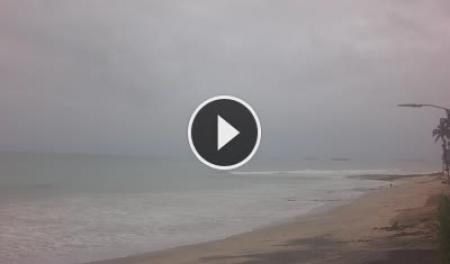
Salinas · the bay
San Lorenzo and Paco Illescas — how busy is the beach?
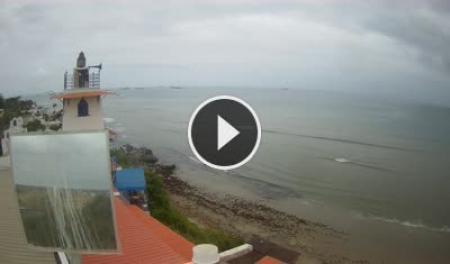
Ballenita · Capaes
The quieter bay east of Salinas.
Beyond the cities
Little places with big stories
Twenty minutes from the malecón, the peninsula changes completely.
A wide, quiet beach under white cliffs. Every Ruta del Spondylus bus stops here.
🚌 Easy by busSalt flats, dunes and a traditional fishing village. Bus from Terminal Sumpa.
🏜️ Off the beaten pathThe peninsula bucket list
How many have you done?
You've already ticked the first one. 😉
- ✅ Found EcuaWiki
- ⬜ Watch the sunset at La Chocolatera
- ⬜ Meet the Amantes de Sumpa
- ⬜ Say hello to the sea lions at La Lobería
- ⬜ Spot a humpback from Mirador Caracol (June–September)
- ⬜ Walk the English streets of Ancón
- ⬜ Watch the boats land at Santa Rosa at dawn
- ⬜ Stand next to a giant sloth at the Megaterio museum
- ⬜ Look over the bay from Mirador de La Caleta
- ⬜ Eat ceviche on the Malecón de Salinas
8,000 years in 90 seconds
A short history of a very old place
From some of the first settlers in the Americas to an American wartime air base — scroll through it all.
8000–4600 BC
The Las Vegas culture — some of the first settled people in Ecuador — live here. Their cemetery at Sumpa holds the Amantes de Sumpa.From 3500 BC
Valdivia, Machalilla and Chorrera cultures follow. The sacred Spondylus shell is traded far into the Andes — and gives the Ruta del Spondylus its name.1527–1531
Pizarro's ships reach this coast; by tradition he came ashore at La Caleta in 1531. Colonial life turns on salt, fishing and farming. See La Caleta →1824 · 1839
Gran Colombia creates the canton of "Punta de Santa Elena"; in 1839 Santa Elena becomes a canton of Guayas.1858
The geographer Manuel Villavicencio records tar and asphalt seeps on the peninsula — the first scientific record of petroleum in Ecuador.1896
After a three-year drought, President Eloy Alfaro exempts the canton from taxes.1911
Ecuador's first oil well, Ancón 1, is drilled at Ancón.1918
Santa Elena's council renames the hamlet of La Agujereada: it becomes Recinto La Libertad.1919–1929
Anglo Ecuadorian Oilfields builds its company camp at Ancón, bringing workers from Britain and the Caribbean, and opens the La Libertad refinery in 1929. The oil story →1936
The railway from Guayaquil reaches Salinas — and the fishing village starts becoming a beach resort.1937
Salinas becomes a canton on 22 December.1942–1946 · World War II
After Pearl Harbor, Ecuador lets the United States build an air and seaplane base at Salinas — known as Base Gama — to guard the Pacific approach to the Panama Canal, alongside a second base on the Galápagos. American fighter planes fly from the new runway, and families living in the cove are moved to Santa Rosa. The Americans leave in early 1946 and hand everything to Ecuador's armed forces. What became of the airfield →1946–1962
The old base runway serves international flights, including Panagra, until Guayaquil's airport takes over.1976
The oil fields of the peninsula are nationalised.1977
Archaeologist Karen Stothert begins excavating Sumpa, putting the Las Vegas culture on the scientific map.1993
La Libertad becomes a canton (law published 14 April).2007
Santa Elena Province is created on 7 November, separating from Guayas.2011
On the centenary of Ancón 1, Ancón is declared national cultural heritage. Visit →Today
385,735 people (2022) — and growing fast: José Luis Tamayo (Muey) grew 69% in twelve years. More in Culture and history.Behind the scenes
Ever wondered how the peninsula actually works?
Where the tap water comes from, where the rubbish goes, who keeps the lights on — explained simply.
Start with the overview: How the Peninsula Works.
35 ways to spend a day
What do you feel like doing?
Each activity has its own page with spots, conditions and local tips.
🌊 In the water
Surfing Swimming Snorkeling Scuba diving Kayaking Kitesurfing Sailing Whale watching Fishing Deep-sea fishing Paddleboarding Windsurfing Bodyboarding🏃 On land
Running Cycling Hiking Horse riding Beach volleyball Football Yoga Skateboarding Kite flying Slacklining Inline skating Walking the dog Rock climbing Sandboarding Camping🌿 Nature and more
Birdwatching Paragliding Tide pools Fossil hunting Stargazing Photography GeocachingEveryday life
Living and getting around
The practical stuff, answered by people who've already figured it out.
Good to know
At a glance
| Province | Santa Elena (since 2007) |
| Cantons | Salinas, La Libertad, Santa Elena |
| Population | 385,735 (2022) |
| Capital | Santa Elena |
| From Guayaquil | about 2 hours by road |
| Currency | US dollar |
| Time | UTC−5 |
Emergencies
911
Dates for your calendar
- Feb/Mar — Carnival
- 14 April — La Libertad's canton day
- 3rd Friday of June — Peregrinación de la Virgen del Mar
- June–September — whale season
- 7 November — Provincialization Day
- 22 December — Salinas' canton day
🏗️ Written by people who live here
306 guides so far. Know a beach, a bus route or a great ceviche place we've missed? Add it — it takes five minutes, and the next person to arrive will thank you.