|
"Not the big-name swells of Montañita — but uncrowded, consistent, and honest. If you know where to look, La Península gives you waves to yourself."
The Santa Elena Peninsula sits at the convergence of the Humboldt and Equatorial currents, creating surf conditions unlike anywhere else on Ecuador's coast. The bay side offers sheltered, forgiving beach breaks for beginners; the open Pacific headlands catch raw swell for intermediate and experienced surfers. The peninsula is typically a stopover on the way north to Montañita — which means the breaks here are rarely crowded.
The peninsula's breaks are spread across three zones: the open south coast (Punta Carnero–Anconcito corridor), the Salinas bay (sheltered inner-bay breaks), and the Ballenita / Punta Blanca stretch to the east. Spots are listed roughly west-to-east.
Open South Coast
Salinas · Intermediate–Advanced ★ Top spot
Playa de la FAE (La Lobería)
The best surf spot on the peninsula. A consistent left-hand reef break with point-break characteristics — the wave peels predictably over a rocky shelf rather than shifting sandbars, producing long, well-shaped lefts. The power and the reef make this intermediate-to-advanced territory. Located inside the Ecuadorian Air Force (FAE) base — bring your ID to present at the military checkpoint on the way in.
Reef break · left
Intermediate–Advanced
Consistent Year Round
ID required at gate
|
Salinas · Experienced
Mar Bravo
The exposed ocean-facing beach in western Salinas. Strong shore dump and rips make this unsuitable for swimming — but it produces short, powerful beach break waves popular with bodyboarders and experienced surfers.
|
Punta Carnero–Anconcito · Intermediate–Advanced
La Diablica
Situated on the exposed south-facing coast between Punta Carnero and Anconcito, this beach break is a swell magnet — it catches almost any S or SW groundswell directly. Known for powerful, fast, and heavy waves with a strong shore break. Can produce clean, manageable surf when the outer coast is closing out. More secluded than urban Salinas breaks, popular with local bodyboarders. Works best at mid-to-high tide; at low tide the wave becomes shallow and dumping. NE offshore wind is ideal.
Beach break
Intermediate+
S/SW swell
Mid–High tide
|
Salinas Bay
The inner bay breaks require swell to wrap around the tip of La Chocolatera to arrive with enough energy. In smaller conditions they can be mellow and fun; on bigger swells they can produce surprisingly punchy, hollow waves. All are more accessible and less exposed than the south coast spots.
Salinas (Petropolis) · Intermediate
Barco Hundido (Paco Illescas)
Named after a "sunken ship" once visible in the bay. A left-hand point break over a rocky/sandy bottom, fairly consistent and relatively protected compared to the open-ocean breaks. Popular with locals. Works best on a medium to large SW swell; can get technical depending on the tide.
Point · left
Intermediate
Med–Large SW swell
|
Salinas (Ecuasal) · All levels
El Muelle
A classic Salinas spot beside the Ecuasal pier, famous for long, peeling left-handers that run alongside the pier structure. Very consistent and works year-round, shining with SW swell and NE wind. One of the more accessible spots in the bay — be mindful of submerged rocks near the pier.
Beach / pier · left
All levels
Year-round
|
Salinas (Mar bravo) · Intermediate
La Chueca
Located near the military base in the San Lorenzo area. A punchy, fast beach break that works as a good alternative when outer breaks like Mar Bravo are too big or closing out. Needs swell to wrap around La Chocolatera; good for intermediate surfers after a quick, hollow wave.
Beach break
Intermediate
S/SW swell
|
Salinas (mar bravo) · Intermediate
La Diablica
A consistent beach break between Punta Carnero and Anconcito, known for fast, hollow sections popular with surfers and bodyboarders alike. Because it sits inside the bay, it requires swell energy to wrap around La Chocolatera. When conditions align, it transforms into a clean, manageable wave. Works best mid-to-high tide; current can strengthen as swell picks up. A great spot for a quick urban session.
Beach break
Intermediate
Mid–High tide
|
Salinas · Intermediate–Advanced
Shitbay
Despite the name, a favourite among locals for its accessibility and reliability. A reef/rocky point break that produces a consistent, rippable wave holding up well across different tide stages — mid-to-high tide preferred to cover the rocks. One of the more shapely waves in the area, though it draws crowds during high season (Jan–Apr) when swell and wind alignment is most favourable.
Reef / point
Intermediate–Advanced
Jan–Apr peak
Mid–High tide
|
Ballenita, Punta Blanca & North Coast
Ballenita · Beginner–Intermediate
Chulluype
The peninsula's most consistent beach break. A long sandy bay with multiple peaks, gentle shoulders, and forgiving closeouts. The default spot for local learners and touring surfers warming up before heading north.
Beach break
Beginner OK
Dec–Apr best
|
Ballenita · Intermediate–Advanced
Farallón Dillon
A rocky offshore islet that wraps and focuses swell into a short, punchy right-hander. Best on a mid-swell with clean conditions. Reached by paddle or panga. Also excellent for snorkeling when flat.
Reef / point
Intermediate+
SW swell
|
Punta Blanca · Intermediate–Advanced
Espigón Break
A jetty-deflected break at the south end of Punta Blanca's 1.3 km beach. Best at mid-to-high tide. The wave breaks left and right off the rocks — the left is longer and better shaped. Often empty on weekdays.
Jetty / beach
Intermediate
Dec–Apr
|
Punta Barandúa · Intermediate–Advanced
Coito (Punta Barandúa)
Located at the northern end of the peninsula near the Punta Barandúa urbanization. A reef break offering both lefts and rights, generally much less crowded than Salinas proper. Requires a solid SW or WSW swell with light SE offshore wind; most rideable around mid-tide. Note the rocky entry and strong rip currents when swell size increases.
Reef break · lefts & rights
Intermediate+
SW / WSW swell
Rocky entry
|
A further option worth noting: Punta Carnero, south of Salinas, produces irregular but occasionally excellent reef waves on large SW swells. Access is difficult, conditions unpredictable, and rip currents are present — locals only, no instructor should bring beginners here.
Peak
Good
Fair
Flat / off-season
| Period
|
Conditions
|
| Dec–Apr
|
Main surf season. NW/SW groundswell 2–8 ft. Warm water (~24 °C). Crowded on weekends, especially Jan–Feb. High season prices for accommodation. All breaks fire; south-coast spots like La Diablica (Punta Carnero) are at their most powerful.
|
| May
|
Transition month. Swell inconsistent but still catches good days. Crowds thin out as Semana Santa passes. South swells can still light up the exposed coast.
|
| Jun–Sep
|
Dry season. Flat or very small at bay breaks. Strong onshore winds make conditions choppy. South-facing spots (La Diablica, Punta Carnero) may catch residual S swell. Whale-watching season instead.
|
| Oct–Nov
|
Second window opens sporadically. Smaller, lighter crowds, lower prices. Worth checking forecasts for surprise swells, especially at Coito and the outer south coast.
|
Live webcams covering two key breaks on the peninsula. Images refresh automatically — use them to get a quick read on swell size, wind texture, and crowd level before heading out.
Salinas · Bay area
Paco Illescas (Barco Hundido)
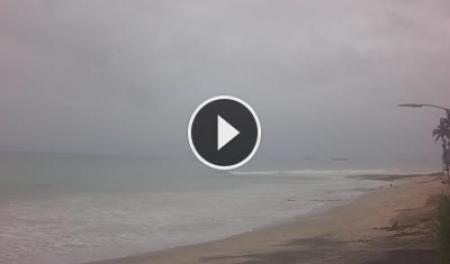
Covers the Paco Illescas / Barco Hundido area. Good for reading bay swell direction and wind chop on the inner bay breaks (El Muelle, La Diablica bay, Shitbay). Click image to open live feed.
|
Ballenita · East bay
Playa de Ballenita – Capaes
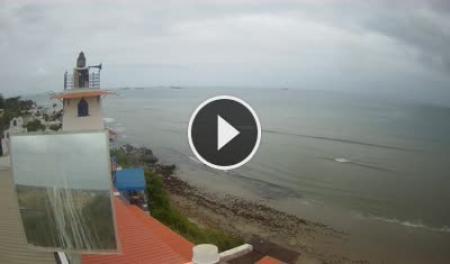
Covers Ballenita beach (Chulluype zone). Useful for checking whether swell is wrapping into the bay and what the wind is doing before the drive out from Salinas. Click image to open live feed.
|
Images refresh every few minutes on the SkylineWebcams servers. No webcam covers the south coast (La Diablica, Punta Carnero) — check Windguru for those spots.
Did you know…?🏄 …an hour up the coast, Montañita's right-hand point break is one of the most consistent waves in Ecuador? All zones are accessible from Salinas (the logical base). Bay breaks like El Muelle, La Chueca, La Diablica (San Lorenzo), Shitbay, and Barco Hundido are within the Salinas urban area — walkable or a short taxi ride. Chulluype and Ballenita are 15 minutes east by taxi or bus. Punta Blanca is just north of Ballenita on the Ruta del Spondylus — every bus heading up the coast stops there. Coito, beside the Punta Barandúa development at the south end of Punta Blanca, is on the same road — any Ruta del Spondylus bus can drop you at the entrance. For the south coast (La Diablica Punta Carnero–Anconcito, Punta Carnero), allow 15–20 minutes by taxi from central Salinas. The journey from Guayaquil takes about 2 hours via the E-40.
See Public Transportation for bus routes and Taxis & Apps for typical fares between towns.
🏄
Escuela de Surf Ballenita
Lessons at Chulluype for all levels. Board rental by hour or day. Based on the beach front, Ballenita. Book same-day in season.
🌊
Salinas Surf & Watersports
Multi-sport operator on the malecón. Surfboards, bodyboards, kayaks. Introductory surf lessons available Dec–Apr.
🚤
Panga transfers to Farallón Dillon
Local fishermen in Ballenita will run surfers out to the rock break — negotiate on the beach. Around $5–8 per person.
Operator listings are community-contributed and may change. If you know of a school or rental not listed, add it to the Operators Directory.
No surf-specific forecast service covers La Península directly. These options work for the area:
- Windguru — search Santa Elena or Salinas for swell and wind forecasts
- Surfline / MSW — search the broader Santa Elena Peninsula zone
- Magic Seaweed — spot: Montañita (same swell window, 1 hour north)
Note: south coast spots (La Diablica Punta Carnero, Punta Carnero reef) respond more directly to S/SW groundswell than the Montañita forecast implies — cross-reference with a Santa Elena point forecast for those breaks.
|
Spot Ratings
Peak season ratings for each break:
La Fae (La Lobería) ★
| Consistency
|
●●●●●
|
| Wave quality
|
●●●●●
|
| Crowds
|
●●●●●
|
El Muelle
| Consistency
|
●●●●●
|
| Beginner-friendly
|
●●●●●
|
| Crowds
|
●●●●●
|
Chulluype
| Consistency
|
●●●●●
|
| Beginner-friendly
|
●●●●●
|
| Crowds
|
●●●●●
|
Shitbay
| Consistency
|
●●●●●
|
| Wave quality
|
●●●●●
|
| Crowds
|
●●●●●
|
Farallón Dillon
| Consistency
|
●●●●●
|
| Beginner-friendly
|
●●●●●
|
| Crowds
|
●●●●●
|
Espigón (Punta Blanca)
| Consistency
|
●●●●●
|
| Beginner-friendly
|
●●●●●
|
| Crowds
|
●●●●●
|
Coito (Punta Barandúa)
| Consistency
|
●●●●●
|
| Wave quality
|
●●●●●
|
| Crowds
|
●●●●●
|
Swell Window
Typical peak season swell by break:
La Fae (La Lobería)
Mar Bravo
La Diablica (south coast)
El Muelle / Bay breaks
Chulluype
Farallón Dillon
Espigón (Punta Blanca)
Coito (Punta Barandúa)
⚠ Safety Notes
⚠
Mar Bravo rips. Strong shore break and side rips. Not for swimming. Surfers only, and experienced ones.
⚠
Coito rips. Rocky entry and strong rip currents when swell increases. Intermediate+ only; local knowledge recommended.
⚠
Punta Carnero. Irregular currents, sharp reef. No lifeguards. Avoid unless with someone who knows the spot.
⚠
El Muelle. Submerged rocks near the pier structure — stay aware of your position in the lineup.
ℹ
No lifeguards at any surf break on the peninsula. Surf within your ability.
ℹ
Sun exposure at the equator is intense year-round. SPF 50+ reef-safe sunscreen and a rashguard are recommended.
🗓 Best by Season
Dec–Apr
All breaks firing. Surfing, bodyboarding, deep-sea fishing.
Jun–Sep
Flat at bay breaks. South coast may catch residual S swell. Switch to whale watching or head to Montañita.
Oct–Nov
Surprise swells possible. Check Windguru before committing. Try Coito or La Diablica south coast.
🏗 Help Build This Page
Know a break not listed? Current on operator status? Add it.
|