
Portal:Ruta del Spondylus
EcuaWiki › Portals › Ruta del Spondylus
Ruta del Spondylus
A red shell so sacred that Andean peoples offered it to bring the rain gave this road its name. Today it links turquoise bays, surf towns, 5,000-year-old villages and cloud forest — all on one bus line.
Every few kilometres the coast reinvents itself. Find the stretch that's made for you 👇
E-15the coast highway
12+towns and comunas
~73 kmin Santa Elena province
5,000years of Spondylus trade
Jun–Sepwhale season
📅 Right now on the route
January — Surf season is on and the water is warm. Montañita's point break is at its best, and the beaches fill up at weekends. Where to surf →
February — Carnival — the busiest days of the year on the coast. Montañita is packed and rooms go weeks ahead. Want calm? Try Olón or Ayangue. Carnival on the coast →
March — Warm sea, green hills after the rains and fewer crowds once Carnival is over. Swim in Ayangue's bay →
April — The rains are ending and the hills are at their greenest — a lovely time to walk inland. Head into the hills →
May — Shoulder season: quiet beaches and lower prices. Perfect for a slow week in Olón. Discover Olón →
June — The humpbacks are back! Look out to sea from the cliffs and beaches all along the route. Where to see whales →
July — Whale season, cooler grey days and school holidays in the highlands — expect visitors from Quito. Book a whale trip →
August — Peak whale season. The misty garúa keeps the cloud forest above the coast lush and green. Walk in the cloud forest →
September — Last chance for whales. The coast is calm, cool and cheap. Watch from the cliffs →
October — The quietest month on the coast: empty beaches and the best prices of the year. Ideal for a slow week in Ayampe. Discover Ayampe →
November — The 2–3 November long weekend fills the beach towns, and on 7 November the province celebrates its birthday. Plan your bus trip →
December — Surf season returns and the holidays bring crowds from Guayaquil. New Year's Eve in Montañita is one of the biggest parties on the coast. Plan a Montañita trip →
Start here
What kind of coast are you looking for?
Same road, four very different trips. Pick yours.
👨👩👧
Calm water and family
- Ayangue — the "Pacific Pool"
- Olón — a long, gentle beach
- Snorkeling
- Punta Blanca — quiet and close to town
🌿
Nature and quiet
- Dos Mangas — gateway to the hills
- Loma Alta cloud forest
- Manglaralto Estuary
- Birdwatching
🏺
History and culture
- Valdivia — some of the oldest pottery in the Americas
- Real Alto — an ancient village
- San Biritute — the rain-bringing stone
- Colonche — the historic parish town of the north
South to north
The route, stop by stop
Buses leave Terminal Sumpa all day and stop in every village. Tap a stop to explore it. (Ayampe and Las Tunas are across the border in Manabí.)
Sumpa 🚌BallenitaPunta BlancaAyangueValdiviaManglaraltoMontañitaOlónCuríaSan JoséLas NúñezLa EntradaLa RinconadaAyampeLas Tunas
Protected bay
A sheltered turquoise cove nicknamed the "Pacific Pool" — calm and clear enough to snorkel almost all year.
🤿 SnorkelingAncient roots
Home of the Valdivia culture, whose pottery is among the oldest in the Americas. Small museum in the village.
🏺 HistoryLocal soul
A quiet parish town with an estuary, a long beach and the north coast's hospital.
🌳 EstuarySurf capital
Ecuador's best-known surf town: consistent waves, a global backpacker scene and late nights.
🏄 Surf · nightlifeFamily retreat
A long, peaceful beach with a clifftop church watching over it. The calm alternative to Montañita.
⛪ Clifftop churchWild shores
One of the most unspoiled beaches on the route — horses on the sand and boats out at dawn.
🐎 Horse ridingArtistic spirit
A small fishing cove with a growing art scene and murals by the sea.
🎨 MuralsDramatic cliffs
High cliffs with sweeping views north and south — great for birds and photos.
🦅 BirdwatchingInto Manabí
Where the forest meets the Pacific: surf, yoga and remarkable wildlife.
🧘 Yoga · surf💡 Every comuna page has a community facts box: beach length, water supply and who runs the village.
Curiosity corner
Did you know…?
The stories most visitors drive straight past.
🐚
…the Spondylus shell was so precious that it travelled from this coast all the way to the high Andes?
🏺
…Valdivia pottery, made here around 5,500 years ago, is among the oldest in the Americas?
💧
…most villages on the north coast aren't on the big water network — they pump their own groundwater through community water boards?
🌳
…families in the hills protect hundreds of hectares of forest through the Socio Bosque programme?
Live
See the waves right now
Live images, south to north. Click an image to open the live feed.
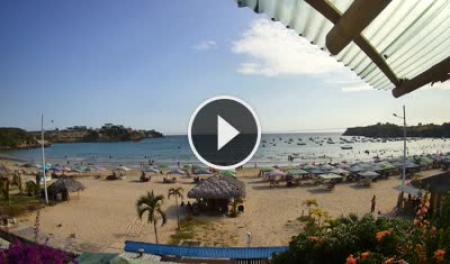
Ayangue · the bay
How clear is the water today?
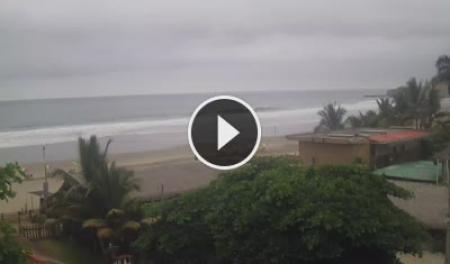
Montañita · town
How busy is the beach?
Montañita · La Punta
Swell size and crowd in the line-up.
Ayampe
Surf and wind where the forest meets the sea.
Las Tunas
The northern end — whale corridor in season.
The Ruta bucket list
How many have you done?
You've already ticked the first one. 😉
- ✅ Found EcuaWiki
- ⬜ Snorkel in Ayangue's turquoise bay
- ⬜ Catch (or try to catch) a wave in Montañita
- ⬜ Watch the sunset from the Olón Church Mirador
- ⬜ See 5,000-year-old pottery in Valdivia
- ⬜ Walk in the cloud forest at Loma Alta
- ⬜ Spot a humpback from the cliffs (June–September)
- ⬜ Ride a horse along the beach at San José
- ⬜ Paddle the Manglaralto Estuary
- ⬜ Ride the bus all the way from Sumpa to Olón (how)
Why "Spondylus"?
The shell that named a road
From 3500 BC
Divers on this coast harvest the thorny oyster, Spondylus. It becomes one of the most valuable trade goods in ancient South America, carried from Ecuador deep into the Andes.Sacred
Andean peoples, including the Inca, linked its red shell with water and fertility and offered it to bring the rain.Trade by sea
Big balsa-wood rafts carried shells along the coast. The Spanish met one of these trading rafts off the Ecuadorian coast in the 1520s.Today
The shell gives its name to the E-15, and artisans still make Spondylus jewellery. More nearby: Valdivia, Real Alto and San Biritute.Wild side
Nature along the route
🌫️
Cloud forest
Loma Alta and the hills around Ayampe: orchids, endemic birds and howler monkeys.
🐢
Marine life
Turtles, rays and reef fish in Ayangue's bay, close to the El Pelado marine reserve.
🏄
Surf breaks
Montañita is the most consistent; Olón, San José and Ayampe suit intermediates.
32 ways to spend a day
What do you feel like doing?
Each activity has its own page with spots, conditions and local tips.
Getting there
Easier than you think
🚗
By car
About 2½ hours from Guayaquil to Montañita on the E-40 and E-15. A bypass near San Pablo lets through traffic skip the towns.
🛣️
The road
The E-15 runs about 750 km along Ecuador's coast. In very heavy rain a few stretches can close for landslides.
Good to know
At a glance
| Provinces | Santa Elena → Manabí |
| Highway | E-15 |
| In Santa Elena | about 73 km |
| Starts at | Terminal Sumpa |
| Parishes | Colonche, Manglaralto |
| Currency | US dollar |
Emergencies
911
- Hospitals — nearest: Hospital Básico Manglaralto
- Police
- Pharmacies on duty
- Natural hazards
- All emergency numbers
Seasons
- Dec–Apr — warm water, best surf, busiest
- Feb/Mar — Carnival: book weeks ahead
- Jun–Sep — whale season, cooler and cheaper
- Oct–Nov — the quietest, cheapest months
🏗️ Know this coast? Share it.
306 guides so far, written by people who live here. A secret beach, a bus time, the best encebollado in Olón — add it in five minutes and help the next traveller.